


Last Updated on September 28, 2026 by Admin
Table of Contents
- Overview Summary
- Key Takeaways
- Introduction
- What Is Condensed Milk?
- Condensed Milk Ingredients
- Types of Condensed Milk
- Condensed Milk Making Process
- Condensed Milk Uses
- Condensed Milk Benefits
- Is Condensed Milk Healthy?
- Homemade Condensed Milk
- Condensed Milk vs Evaporated Milk
- Factors Affecting Condensed Milk Quality
- Food Processing and Preservation of Condensed Milk
- FICSI and Food Industry Skill Development
- Role of Condensed Milk in Modern Food Processing
- How to Store Condensed Milk
- Conclusion
- FAQs
Overview Summary
Condensed milk is a concentrated milk product made by removing a substantial portion of water from milk. It is commonly used in desserts, beverages, bakery products, confectionery, and several traditional recipes. Depending on the formulation, it may contain added sugar or be produced without it. Understanding condensed milk ingredients, its manufacturing process, different varieties, uses, and storage requirements helps consumers and food professionals make informed choices.
Key Takeaways
- Condensed milk is made by concentrating milk through controlled water removal.
- Condensed milk ingredients commonly include milk and, in sweetened varieties, added sugar.
- Sweetened condensed milk is thick, rich, and sweet and is widely used in desserts.
- Unsweetened condensed milk is generally known as evaporated milk and does not contain added sugar.
- The condensed milk making process involves standardisation, heat treatment, concentration, and appropriate packaging.
- Major types of condensed milk differ in sugar content, milk composition, fat level, and formulation.
- Condensed milk uses include desserts, beverages, bakery products, confectionery, and prepared foods.
- Condensed milk benefits include convenience, concentrated milk solids, versatility, and a long storage life when commercially processed and packaged correctly.
- Home made condensed milk can be prepared by reducing milk with sugar, but its storage life is usually shorter than commercially manufactured products.
- Proper food processing and preservation practices are essential for maintaining the safety, quality, and shelf stability of condensed milk.
Introduction
Milk is a highly nutritious but perishable food because it contains water, proteins, fats, lactose, minerals, and other nutrients that can support microbial growth. Food processing techniques can transform milk into products with different textures, flavours, concentrations, and storage characteristics. Condensed milk is one such product.
By removing much of the water from milk, manufacturers create a thicker and more concentrated product. When sugar is incorporated, the resulting product is generally called sweetened condensed milk. Another concentrated milk product without added sugar is evaporated milk, which is often referred to as unsweetened condensed milk in general discussions.
So, what is condensed milk, how is it made, and why is it used so widely? Let’s explore its ingredients, varieties, processing method, applications, benefits, and storage considerations.
What Is Condensed Milk?
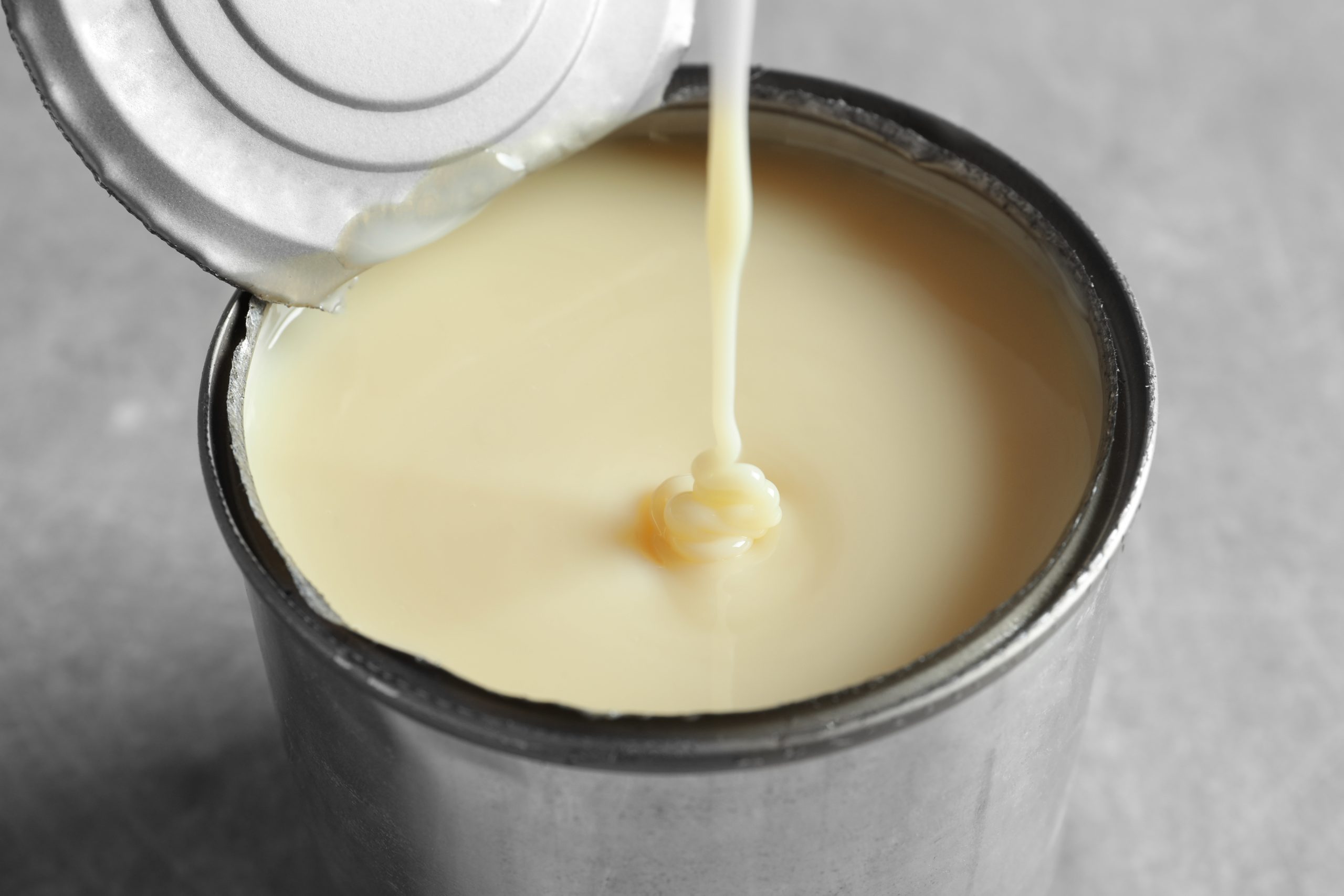
What is condensed milk? In simple terms, condensed milk is milk from which a significant amount of water has been removed to increase the concentration of milk solids.
The concentration process produces a thicker product than ordinary liquid milk. Depending on the type, sugar may be added before or after concentration.
Commercial condensed milk is manufactured under controlled conditions to achieve consistent composition, texture, colour, flavour, and microbiological quality. The final product can be packaged in cans, tubes, pouches, or other suitable containers.
One important distinction is between sweetened condensed milk and evaporated milk. Sweetened condensed milk contains added sugar, while evaporated milk is concentrated without the addition of sugar. Therefore, consumers should check the product name and ingredient label rather than assuming that every concentrated milk product contains sugar.
Condensed Milk Ingredients
The exact condensed milk ingredients vary depending on the product and manufacturer.
- Milk: Milk is the primary raw material. It supplies proteins, milk fat, lactose, minerals, and other milk solids.
- Sugar: Sweetened condensed milk contains added sugar. Sugar contributes sweetness while also influencing the product’s texture, viscosity, water availability, and preservation characteristics.
- Milk Solids: Some formulations may use additional milk solids to achieve a desired composition, texture, or consistency.
- Other Permitted Ingredients: Depending on the product specification and applicable food regulations, manufacturers may use stabilisers or other functional ingredients to achieve consistent quality.
The ingredient list and nutritional information on the package provide the most accurate information about a particular product.
Types of Condensed Milk
There are several types of condensed milk, and the terminology can sometimes confuse.
-
Sweetened Condensed Milk
Sweetened condensed milk is produced by concentrating milk and incorporating a substantial amount of sugar. It has a thick, creamy consistency and sweet flavour.
It is particularly popular in desserts, confectionery, bakery products, puddings, beverages, and traditional sweets.
Because of its high sugar content, it should be treated as a sweet ingredient rather than as a direct replacement for plain milk in every recipe.
-
Unsweetened Condensed Milk
Unsweetened condensed milk is commonly used to refer to evaporated milk. It is concentrated milk without the addition of sugar.
It generally has a thinner consistency than sweetened condensed milk and can be used in savoury dishes, beverages, sauces, soups, and desserts.
-
Full-Fat Condensed Milk
Full-fat products retain a higher proportion of milk fat and can provide a rich mouthfeel. They are commonly used in applications where creaminess is desirable.
-
Low-Fat or Reduced-Fat Varieties
Reduced-fat concentrated milk products are formulated with lower milk-fat levels. Their texture and flavour may differ from full-fat versions, so recipes may need adjustments when substituting between products.
-
Plant-Based Condensed Alternatives
Some manufacturers produce condensed alternatives using plant-based ingredients such as coconut, soy, oat, or other plant sources. These should not automatically be considered equivalent to dairy condensed milk because their nutritional composition and functional behaviour can differ.
Condensed Milk Making Process
The condensed milk making process involves several carefully controlled stages. Commercial production is more precise than simply reducing milk at home because manufacturers must meet specific compositional, safety, and quality requirements.
1. Milk Selection
Good-quality milk is selected as the starting material. It is checked for characteristics such as composition, freshness, acidity, and microbiological quality.
2. Filtration and Standardisation
The milk may be filtered to remove physical impurities and standardised to achieve the desired fat and solids composition. Standardisation helps ensure that every production batch has a consistent formulation.
3. Heat Treatment
The milk undergoes controlled heat treatment. This helps reduce undesirable microorganisms and influences the functional properties of milk proteins. The exact conditions depend on the product and manufacturing system.
4. Addition of Sugar
For sweetened condensed milk, sugar is incorporated at an appropriate stage. The sugar concentration is carefully controlled because it affects sweetness, viscosity, water availability, and storage stability.
5. Concentration
The milk is concentrated by removing water, commonly under vacuum. Vacuum concentration allows evaporation to occur at a lower temperature than would be required under atmospheric conditions. This helps control excessive heat exposure and supports the desired colour, flavour, and nutritional characteristics.
6. Cooling and Crystallisation Control
After concentration, the product is cooled under controlled conditions. For sweetened condensed milk, controlling lactose crystallisation is particularly important. If lactose crystals become too large, the product can develop an undesirable sandy or gritty texture. Manufacturers therefore carefully manage cooling and crystallisation.
7. Packaging
The finished product is filled into suitable containers under controlled hygienic conditions. Packaging protects the product from contamination and environmental exposure.
8. Quality Testing
Finished products may be evaluated for composition, viscosity, moisture, acidity, colour, flavour, texture, and microbiological quality.
This systematic approach helps ensure consistency from one production batch to another.
Condensed Milk Uses
There are numerous condensed milk uses in households and commercial food production.
- Desserts: Condensed milk is widely used in puddings, ice creams, fudge, caramel-based desserts, cheesecakes, and other sweet preparations.
- Indian Sweets: Sweetened condensed milk can be used in recipes for ladoos, barfi, kheer variations, peda-style sweets, and other preparations. It can reduce the need to separately add milk and sugar in certain recipes.
- Beverages: It can be incorporated into tea, coffee, milkshakes, smoothies, and other beverages where sweetness and creaminess are desired.
- Bakery Products: Condensed milk can contribute sweetness, moisture, body, colour, and richness to selected cakes, biscuits, breads, and other baked products.
- Confectionery: It is used in fudge, toffee, caramel-style products, fillings, and other confectionery applications.
- Sauces and Toppings: Concentrated milk products can be used to create creamy sauces, dessert toppings, fillings, and spreads.
- Industrial Food Production: Food manufacturers may use condensed milk as an ingredient in formulated products where concentrated milk solids and a consistent texture are required.
Condensed Milk Benefits
The condensed milk benefits depend on the specific product and how it is consumed.
- Convenient Milk Ingredient: Condensed milk provides a concentrated form of milk solids that can be incorporated directly into recipes.
- Long Storage Life for Commercial Products: Properly processed and packaged commercial products can have a considerably longer unopened storage life than fresh milk.
- Versatile Ingredient: Its rich texture and concentrated composition make it useful across desserts, bakery, beverages, and confectionery.
- Consistent Formulation: Commercial products provide a relatively consistent composition, making it easier for food manufacturers and bakers to achieve repeatable results.
- Source of Nutrients: Because it is derived from milk, dairy condensed products can provide nutrients such as protein, calcium, and other minerals. However, the nutritional profile varies considerably between sweetened and unsweetened products.
- Supports Food Product Development: Food manufacturers can use concentrated milk products to develop formulations requiring specific levels of milk solids, sweetness, viscosity, and flavour.
Is Condensed Milk Healthy?
Whether condensed milk is a healthy choice depends largely on the type and quantity consumed.
Sweetened condensed milk contains substantial added sugar, so it is best used in moderation as part of a balanced diet. Although it provides some nutrients from milk, its high sugar content means that it should not be considered nutritionally equivalent to ordinary milk.
Unsweetened concentrated milk, such as evaporated milk, does not contain added sugar and can provide concentrated milk nutrients. However, its fat and calorie content depend on the formulation.
Therefore, consumers should consider the ingredient list, serving size, sugar content, fat content, and overall dietary pattern when choosing a product.
Homemade Condensed Milk
Homemade condensed milk can be prepared using relatively simple ingredients. A common approach involves simmering milk with sugar over controlled heat until a significant portion of the water evaporates and the mixture becomes thick.
A basic preparation generally involves:
1. Combine milk and sugar in a suitable pan.
2. Heating the mixture gently.
3. Stirring regularly to prevent scorching.
4. Allowing water to evaporate gradually.
5. Continue until the mixture reaches the desired consistency.
6. Cooling before using or storing.
However, homemade products differ from commercially manufactured condensed milk. Commercial production uses controlled heating, composition, hygiene, packaging, and quality testing. Homemade versions generally have a shorter storage life and may be more vulnerable to contamination if handled or stored improperly.
For homemade preparations, clean utensils, hygienic handling, appropriate refrigeration, and prompt consumption are important.
Condensed Milk vs Evaporated Milk
The terms condensed milk and evaporated milk are sometimes used interchangeably in casual conversation, but they generally describe different products.
| Feature | Sweetened Condensed Milk | Evaporated Milk |
|---|---|---|
| Added sugar | Yes | No |
| Taste | Sweet | Mildly milky |
| Texture | Very thick | Thick but more fluid |
| Common use | Desserts and confectionery | Beverages, sauces and cooking |
| Storage | Long unopened shelf life when commercially processed | Long unopened shelf life when commercially processed |
| Main function | Sweetness and concentrated milk solids | Concentrated milk solids |
Understanding this distinction is important when following recipes because substituting one for the other can significantly change sweetness, consistency, and final results.
Factors Affecting Condensed Milk Quality
Several factors can influence the quality of condensed milk during production and storage.
- Milk Quality: The composition and microbiological quality of the starting milk directly influence the final product.
- Heat Treatment: Excessive or poorly controlled heating can affect colour, flavour, proteins, and other quality characteristics.
- Sugar Concentration: In sweetened products, the sugar concentration affects sweetness, texture, water availability, and stability.
- Lactose Crystallisation: Poorly controlled lactose crystallisation can produce an undesirable gritty texture.
- Moisture: Moisture content affects consistency, stability, and storage behaviour.
- Packaging: Appropriate packaging protects the product from contamination, moisture, oxygen, light, and other environmental factors.
- Storage Conditions: Even properly processed products need suitable storage conditions. Once a commercial container is opened, refrigeration and hygienic handling become particularly important.
Food Processing and Preservation of Condensed Milk
Food processing and preservation play an important role in transforming perishable milk into concentrated products with improved storage stability. Heat treatment helps control microorganisms, while concentration reduces the amount of available water. In sweetened condensed milk, the high concentration of sugar also contributes to preservation by reducing water availability for microbial growth. Proper packaging further protects the product from contamination and environmental conditions. Together, raw-material control, hygienic processing, thermal treatment, concentration, packaging, storage, and quality testing help manufacturers maintain the safety, consistency, and shelf stability of condensed milk.
FICSI and Food Industry Skill Development
The Food Industry Capacity & Skill Initiative (FICSI) helps learners and professionals build practical skills relevant to the food-processing sector. Training related to food processing, food safety, quality control, dairy processing, and preservation can help individuals understand how raw materials are transformed into safe and consistent food products. For those interested in dairy and food manufacturing careers, knowledge of processing operations, hygiene, quality testing, and preservation principles can provide a useful foundation for working in modern food-production environments.
Role of Condensed Milk in Modern Food Processing
Condensed milk demonstrates how food processing can modify a perishable raw material to create a convenient and versatile ingredient.
Modern dairy processing focuses not only on removing water but also on maintaining consistent quality. Manufacturers need to control milk composition, processing temperatures, concentration conditions, sugar levels, crystallisation, packaging, and storage.
These controls are particularly important for commercial production because even small variations can affect viscosity, colour, flavour, texture, and stability.
Food technologists therefore play an important role in monitoring production parameters and ensuring that the finished product meets established specifications.
How to Store Condensed Milk
Storage requirements depend on whether the product is unopened, opened, commercially processed, or homemade. For an unopened commercial product, consumers should follow the manufacturer’s storage instructions and check the best-before or use-by information on the package.
After opening, the product should generally be transferred to a clean, suitable container if recommended by the manufacturer and refrigerated. It should also be protected from contamination and used within the recommended period.
Homemade condensed milk generally requires greater care because it does not undergo the same controlled commercial processing and packaging conditions. Refrigeration and timely consumption are particularly important.
Read Also: What Is Fortified Milk? Meaning, Benefits & Examples
Conclusion
Condensed milk is a concentrated milk product created by removing a significant portion of water from milk. Depending on the formulation, it may contain added sugar, resulting in sweetened condensed milk, or be produced without added sugar, as in evaporated milk.
Understanding condensed milk ingredients, types of condensed milk, and the condensed milk making process helps explain why this ingredient has become so widely used. Its applications range from desserts and beverages to bakery, confectionery, and industrial food formulations.
The product also demonstrates the importance of food processing and preservation in extending the usability of perishable raw materials. Whether commercially produced or prepared as homemade condensed milk, proper handling, storage, and hygiene remain essential for maintaining quality and safety.
FAQs
Related Blogs
What Is Condensed Milk? Ingredients, Types, Uses & Benefits
Last Updated on September 28, 2026 by Admin Table of...
What Is Maltodextrin? Uses, Benefits, Side Effects & More
Last Updated on September 25, 2026 by Admin Table of...

What Is Food Chemistry? Meaning, Principles, Basics & Importance
Last Updated on September 25, 2026 by Admin Table of...

What Are Nutraceuticals Types, Applications, and Industry Growth in India
Last Updated on September 21, 2026 by Admin Table of...

Natural and Artificial Preservatives in Food: A Complete Guide
Last Updated on August 31, 2026 by Admin Table of...

Different Types of Sugar in Food and Their Effects on Health
Last Updated on August 6, 2026 by Admin Table of...

Food Colours Explained: Types, Uses, Natural vs Artificial & FSSAI Guidelines
Last Updated on July 7, 2026 by Admin Summary Food...