


Last Updated on July 7, 2026 by Admin
Summary
Food colours are among the most widely used and most debated additives in the global food industry. From the vibrant orange of packaged snacks to the deep red of commercial beverages, food colourants play a powerful role in shaping how consumers perceive, select, and enjoy food products. This guide explains what food colouring is, the key types of food colour, the difference between natural food colours and artificial food colours, FSSAI-approved food colours, the harmful effects of artificial food colours, and the role of colour management in food quality management, in clear, practical terms for food science professionals, students, and industry practitioners.
Key Takeaways
- Food colours enhance or restore the appearance of food and beverages.
- They are classified as natural or artificial, each with different benefits and limitations.
- FSSAI regulates approved food colours and their permitted usage limits.
- Artificial colours are more stable but may raise health concerns if misused.
- Proper use of food colours ensures food safety, quality, and regulatory compliance.
Introduction
Close your eyes and imagine a bright yellow lemon-flavoured candy, a vivid red strawberry jam, or a rich brown chocolate cake. Now consider, would those products look equally appealing if they were grey, beige, or colourless? Almost certainly not. Colour is the first sensory signal the human brain processes when evaluating food, and it powerfully shapes expectations of flavour, freshness, and quality before a single bite is taken.
This is why food colours are among the most extensively used additives in the global food industry. India’s food processing sector, one of the largest in the world, valued at over USD 300 billion and employing more than 1.93 crore people (Ministry of Food Processing Industries, 2023), uses a wide range of food colourants across thousands of product categories. Yet the regulatory landscape, the science of safety, and the growing consumer shift toward natural food colors make this a rapidly evolving area that demands clear, current understanding from food professionals at every level.
What Is Food Colouring?
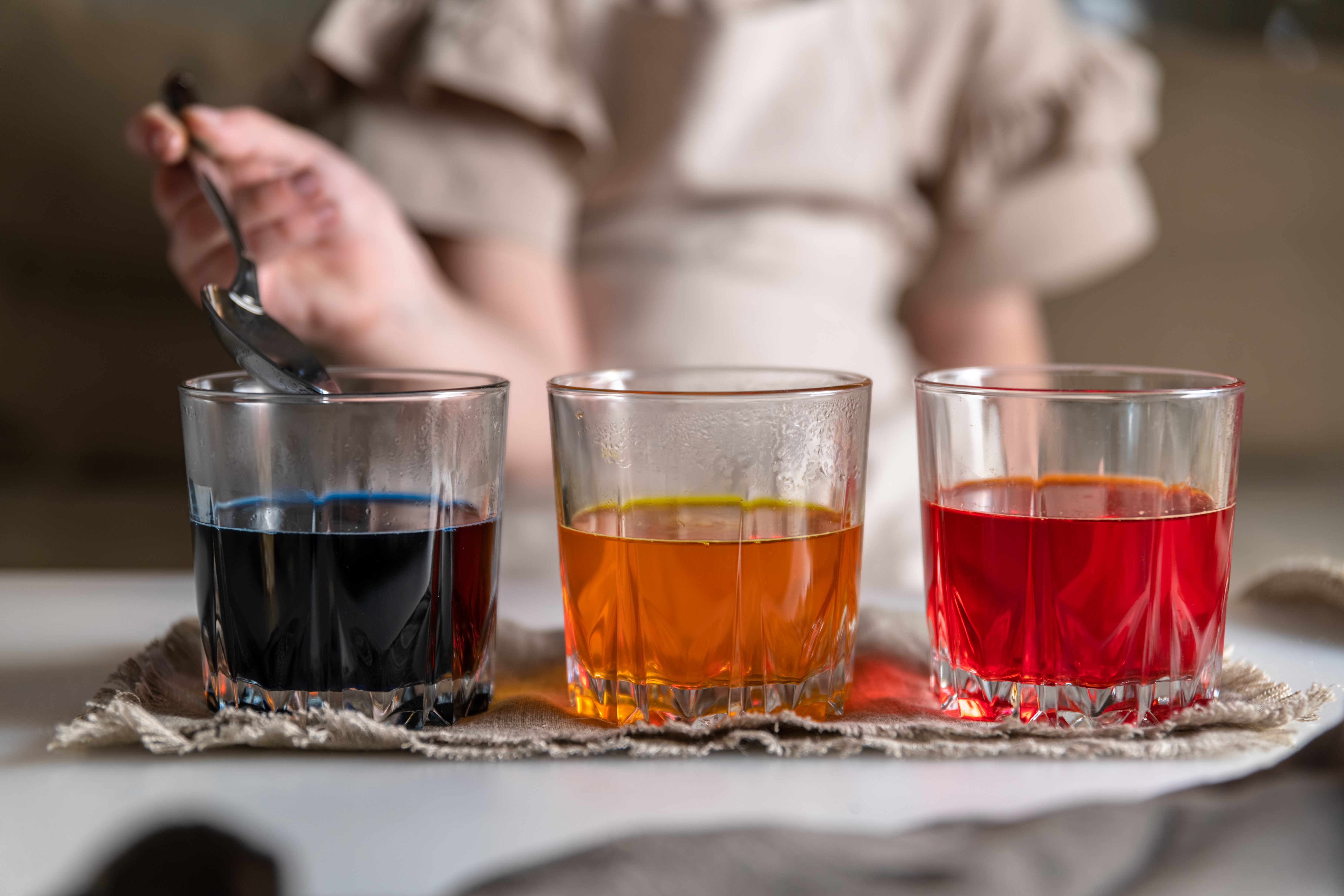
What is food colouring in precise terms? A food colour, also called a food colouring agent, is any dye, pigment, or substance that is added to food or drink to change or enhance its colour, or to restore colour lost during processing, storage, or packaging.
Why Colour Matters in Food
The uses of food colours are rooted in both psychology and practical food science:
- Consumer appeal: Colour is the primary visual cue consumers use to assess food quality, ripeness, and desirability. Bright, consistent colour drives purchase decisions.
- Flavour association: Consumers associate specific colours with specific flavours, yellow with lemon, red with strawberry, orange with orange, and will often perceive coloured food as more intensely flavoured, even when flavour compounds are identical.
- Processing restoration: Many food colourants are used to restore colour lost during heat treatment, fermentation, freezing, or prolonged storage, returning the product to a consumer-acceptable appearance.
- Brand consistency: In branded food products, precise colour matching across batches is critical for consumer trust. Food colouring agents provide the consistency that natural raw material variation cannot.
Classification of Food Colours
Food colours are classified in several ways: by origin, by solubility, and by their chemical structure:
- By origin: Natural, nature-identical, or artificial (synthetic).
- By solubility: Water-soluble dyes (most synthetic colours and many natural extracts) or oil-soluble colours (used in fat-based products).
- By form: Liquid, powder, granule, paste, or emulsion.
Types of Food Colour: Natural vs Artificial
Understanding the types of food colour begins with the fundamental distinction between natural and artificial sources.
Natural Food Colors
Natural food colours are derived from plant, animal, mineral, or microbial sources, extracted through physical, microbiological, or enzymatic processes that do not chemically alter the pigment’s nature.
Advantages of Natural Food Colors
- Strong and growing consumer preference, particularly among health-conscious and clean-label-oriented Indian consumers.
- Generally considered safe at permitted levels with minimal adverse health effects
- Aligned with FSSAI’s clean label and natural food promotion agenda.
- Many offer additional nutritional or functional benefits, curcumin’s anti-inflammatory properties being the most prominent example in the Indian context.
Limitations of Natural Food Colors
- Less stable than synthetic food colours, susceptible to degradation by heat, light, pH changes, and oxidation during processing and storage.
- Higher cost per unit of colour strength compared to artificial food colors.
- Greater batch-to-batch variability due to dependence on agricultural raw materials.
- Limited colour range, some hues (particularly bright blue and vivid green) are difficult to achieve with natural food colours at commercially viable concentrations.
Artificial Food Colours
Artificial food colours, also called synthetic food colours, are chemically synthesised compounds that do not occur naturally in food. Most are derived from petroleum-based chemical precursors and have been developed specifically for their intense, stable colouring properties.
Advantages of Synthetic Food Colours
- Exceptional colour stability across a wide range of processing conditions, heat, pH, and light.
- High tinctorial strength, very small quantities produce intense, consistent colour.
- Low cost compared to natural food colours of equivalent colour strength.
- Consistent colour across batches, critical for branded product consistency.
Key FSSAI Regulatory Requirements
Food quality management teams must ensure compliance with the following FSSAI requirements for food colours:
- Only colours from the permitted list may be used; using any food colourant not on the list of permitted food colours in India is a violation of the FSS Act, 2006.
- Maximum permissible levels must not be exceeded. FSSAI specifies individual limits for each colour in each food category, typically ranging from 50 mg/kg to 200 mg/kg for synthetic food colours.
- Colours must be declared in the ingredients list on the product label, by their specific name or E-number.
- Mixing of colours not specifically permitted in combination is prohibited.
- Colours must not be used to deceive consumers about the quality, freshness, or composition of the food.
Foods Prohibited from Containing Added Colours Under FSSAI
Certain food categories are prohibited from containing any food colourants under FSSAI regulations:
- Pure, unprocessed fruits and vegetables
- Plain meat, poultry, and fish
- Plain milk and cream
- Honey
- Edible oils and fats (except butter and margarine, which have specific provisions)
- Baby food and infant formula
Harmful Effects of Artificial Food Colours
The harmful effects of artificial food colours have been the subject of significant scientific research and regulatory debate globally, and are increasingly influencing both consumer behaviour and regulatory policy in India.
Hyperactivity and Behavioural Effects in Children
The most extensively studied effects of food colouring concern the relationship between synthetic food colours and hyperactivity in children:
- A landmark study published in The Lancet (McCann et al., 2007), the Southampton Study, found that mixtures of six specific synthetic food colours (including Tartrazine, Sunset Yellow, and Carmoisine) combined with sodium benzoate significantly increased hyperactivity in children aged 3 and 8–9 years.
- Following this study, the European Food Safety Authority (EFSA) mandated warning labels on foods containing the Southampton six colours: “May affect activity and attention in children”.
- While FSSAI has not yet adopted equivalent mandatory warning labelling, the findings have influenced product reformulation decisions among leading Indian food manufacturers.
Uses of Food Colours Across the Indian Food Industry
The uses of food colours in India’s food processing sector are extensive and span virtually every product category:
Beverages
- Soft drinks, fruit-flavoured drinks, and energy drinks use synthetic food colours — primarily Tartrazine, Sunset Yellow, Carmoisine, and Brilliant Blue- to achieve consistent, vibrant colours that align with consumer flavour expectations.
- Health and wellness beverages increasingly use natural food colours, turmeric extract, hibiscus, and beetroot, to meet clean-label consumer preferences.
Confectionery and Bakery
- Candies, lollipops, and sugar-coated products are among the highest users of food colouring agents, requiring bright, stable colours resistant to the acidic and high-sugar environments of confectionery manufacturing.
- Bread, cakes, and pastries use caramel colour, annatto, and riboflavin to achieve appetising golden and brown tones.
Dairy Products
- Flavoured milk, ice cream, and flavoured yoghurt use both natural food colours and FSSAI-approved food colours in the synthetic category to create consistent, consumer-attractive colour profiles.
- Butter is commonly coloured with annatto (E160b) to achieve a consistent yellow hue regardless of seasonal variation in milk fat colour.
Savoury Foods and Condiments
- Ketchup, sauces, and pickles use caramel colour and natural food colours such as paprika extract and tomato lycopene.
- Instant noodles and their flavouring sachets frequently contain synthetic food colours, a category under increasing regulatory scrutiny in India.
Traditional Indian Sweets and Snacks
- Mithai, namkeen, and traditional sweets represent a significant market for food colouring agents in India, though this sector also carries the highest risk of non-permitted colour use, particularly in the unorganised segment.
Food Colours and Food Quality Management
Effective food quality management of food colours requires a systematic approach across the entire product development and manufacturing lifecycle:
Quality Management Practices for Food Colour Compliance
- Supplier qualification: All food colouring agents must be sourced from qualified suppliers who can provide FSSAI-compliant certificates of analysis, including identity, purity, and absence of non-permitted contaminants.
- Specification development: Clear internal specifications for each food colour used, including permitted colour name, E-number, grade, maximum usage level, and food category of application.
- In-process monitoring: Regular colour strength and identity testing during production, using spectrophotometric analysis, to ensure consistency and compliance with maximum permissible limits.
- Label compliance: Ensuring all food colours used are correctly declared on product labels per FSSAI labelling regulations, by specific name or approved E-number.
- Adulteration testing: Particularly critical for businesses using natural raw materials, testing incoming spices, dried fruits, and other colourful ingredients for the presence of non-permitted food colours added by upstream suppliers.
FICSI: Building Food Colour and Additive Expertise for India’s Food Industry
FICSI, the Food Industry Capacity and Skill Initiative, is India’s nodal skilling body for the food processing sector, operating under the Ministry of Food Processing Industries, Government of India. Through industry-aligned training programs and certification courses, FICSI builds practical competencies across food technology, quality assurance, regulatory compliance, and product development, equipping professionals at every level of India’s food processing industry with the applied knowledge they need to perform, innovate, and grow.
Conclusion
Food colours are much more than visual enhancers; they represent a scientifically regulated category of food additives that influence consumer perception, product appeal, food technology, public health, and regulatory compliance. A thorough understanding of food colouring, including the different types of food colours, FSSAI-approved food colours, the list of permitted food colours in India, the potential harmful effects of artificial food colours, and the increasing adoption of natural food colours, is essential for food science and quality management professionals.
As consumers become more health-conscious and demand cleaner labels, and as FSSAI continues to strengthen food safety regulations, the food industry must embrace greater transparency, scientific rigour, and responsible practices in the selection and use of food colourants. This shift will play a crucial role in ensuring both consumer trust and regulatory compliance in India’s evolving food processing landscape.
Frequently Asked Questions (FAQs)
Q: What is food colouring and why is it used in food?
In simple terms, it is any substance added to food to give it colour, restore colour lost during processing, or enhance its visual appeal. The uses of food colours range from making packaged beverages look vibrant and consistent to restoring the natural colour of processed dairy, meat, and bakery products that lose colour during heat treatment or storage.
Q: What is the difference between natural food colors and artificial food colors?
Natural food colors are extracted from plant, animal, or mineral sources such as turmeric, beetroot, and annatto — and are generally perceived as safer and more consumer-friendly. Artificial food colors are chemically synthesised compounds such as Tartrazine and Sunset Yellow, that offer greater colour stability and consistency but carry greater health scrutiny and regulatory oversight.
Q: What are the harmful effects of artificial food colours?
The harmful effects of artificial food colours documented in scientific research include hyperactivity and attention deficits in children (particularly associated with the Southampton six colours), allergic reactions, including urticaria and asthma in sensitive individuals, and potential carcinogenicity of certain dyes withdrawn from permitted lists globally. Non-permitted industrial dyes such as Metanil Yellow and Rhodamine B, sometimes found in Indian food, carry more serious toxicological risks.
Q: How can consumers identify added food colours on Indian food labels?
Under FSSAI labelling regulations, all food colouring agents used in packaged food must be declared in the ingredients list, either by their specific name (e.g., “Tartrazine”) or their E-number (e.g., “E102”). Consumers can identify synthetic food colours by looking for colour names or E-numbers in the E100–E199 range. Natural food colours are typically listed by name, such as “turmeric extract” or “beetroot red.”
Q: Why is food colour management important in food quality management?
Food colour management is a critical component of food quality management because regulatory non-compliance, using non-permitted colours or exceeding maximum permissible levels, carries serious legal, financial, and reputational consequences under India’s FSS Act, 2006. Additionally, adulteration with non-permitted industrial dyes is a significant food safety risk that robust food quality management systems must actively prevent through supplier qualification, incoming material testing, and in-process monitoring.
Related Blogs
Food Microbiology: Types, Importance and Applications in Food Safety
Last Updated on October 19, 2026 by Admin Table of...
Pasteurisation Explained: Process, Types, Temperature, Benefits & Applications
Last Updated on October 14, 2026 by Admin Table of...
Shelf Life Meaning: What It Is, Why It Matters & How It Differs from Expiry Date
Last Updated on October 19, 2026 by Admin Table of...
What Is Condensed Milk? Ingredients, Types, Uses & Benefits
Last Updated on October 19, 2026 by Admin Table of...
What Is Maltodextrin? Uses, Benefits, Side Effects & More
Last Updated on October 19, 2026 by Admin Table of...

What Is Food Chemistry? Meaning, Principles, Basics & Importance
Last Updated on October 19, 2026 by Admin Table of...
What Are Nutraceuticals Types, Applications, and Industry Growth in India
Last Updated on September 21, 2026 by Admin Table of...
Natural and Artificial Preservatives in Food: A Complete Guide
Last Updated on August 31, 2026 by Admin Table of...
Different Types of Sugar in Food and Their Effects on Health
Last Updated on August 6, 2026 by Admin Table of...
Food Colours Explained: Types, Uses, Natural vs Artificial & FSSAI Guidelines
Last Updated on July 7, 2026 by Admin Summary Food...