


Last Updated on July 7, 2026 by Admin
Summary
Freeze-drying is one of the most sophisticated and effective methods of food processing and preservation available today, removing moisture from food while preserving its nutritional content, flavour, texture, and shelf life far beyond what conventional drying methods can achieve. This guide explains what a freeze dryer is, how the freeze-drying process works, its key freeze-drying applications, the advantages and disadvantages of freeze-drying, and its growing role in the freeze-drying industry in food, in clear, accessible language for food science professionals, students, and industry practitioners alike.
Key Takeaways
- Freeze-drying (lyophilisation) removes moisture by freezing food and converting ice directly into vapour (sublimation).
- The process has three stages: freezing, primary drying (sublimation), and secondary drying (desorption).
- Freeze-dried foods retain up to 97% of their nutrients, along with their flavour, colour, and texture.
- Common applications include food processing, pharmaceuticals, nutraceuticals, military rations, and space food.
- Freeze-dried food offers a long shelf life (15–25 years) without preservatives when properly packaged.
- The main drawbacks are high equipment costs, energy consumption, and longer processing times.
- Freeze-drying is becoming increasingly important in India’s food processing industry due to rising demand for premium, shelf-stable foods.
Introduction
Imagine a strawberry that was picked at peak ripeness, processed within hours, and then stored on a shelf for 25 years, only to be rehydrated minutes before eating and tasting almost identical to the day it was harvested. This is not a marketing exaggeration; it is the extraordinary reality of freeze-drying, a technology that has quietly transformed food processing and preservation across the globe.
From the instant coffee in your kitchen cabinet to the ready-to-eat meals consumed by astronauts on the International Space Station, freeze-dried food is far more present in daily life than most people realise. And as consumer demand for clean-label, minimally processed, nutrient-dense convenience foods grows, particularly in India’s rapidly evolving food manufacturing sector — understanding freeze-drying in the food industry is increasingly essential knowledge for food science professionals, technologists, and industry leaders.
What Is Freeze-drying?
Freeze-drying scientifically known as lyophilisation — is a low-temperature dehydration process that removes water from food or other biological materials by first freezing the product and then reducing the surrounding pressure to allow the frozen water (ice) to sublimate directly from the solid phase to the vapour phase — bypassing the liquid phase entirely.
What Is a Freeze Dryer?
What is a freeze dryer in practical terms? It is a specialised piece of equipment consisting of three core components:
- Freezing chamber (drying chamber): Where the product is placed on shelves and frozen to the required freeze-drying temperature
- Vacuum system: Reduces the pressure inside the chamber to below the triple point of water the pressure at which ice can sublimate directly to vapour without melting
- Condenser: A cold surface (typically maintained at -50°C to -80°C) that captures and re-freezes the water vapour as it leaves the product preventing it from re-entering the chamber and contaminating the dried product
How Does It Differ from Conventional Drying?
Conventional drying methods such as spray drying, hot air drying, and drum drying use heat to evaporate moisture. This heat degrades heat-sensitive nutrients, alters flavour compounds, causes colour changes, and shrinks the food’s cellular structure. Freeze-drying avoids all of these problems by operating at low temperatures throughout making it the gold standard for preserving the quality of sensitive food products.
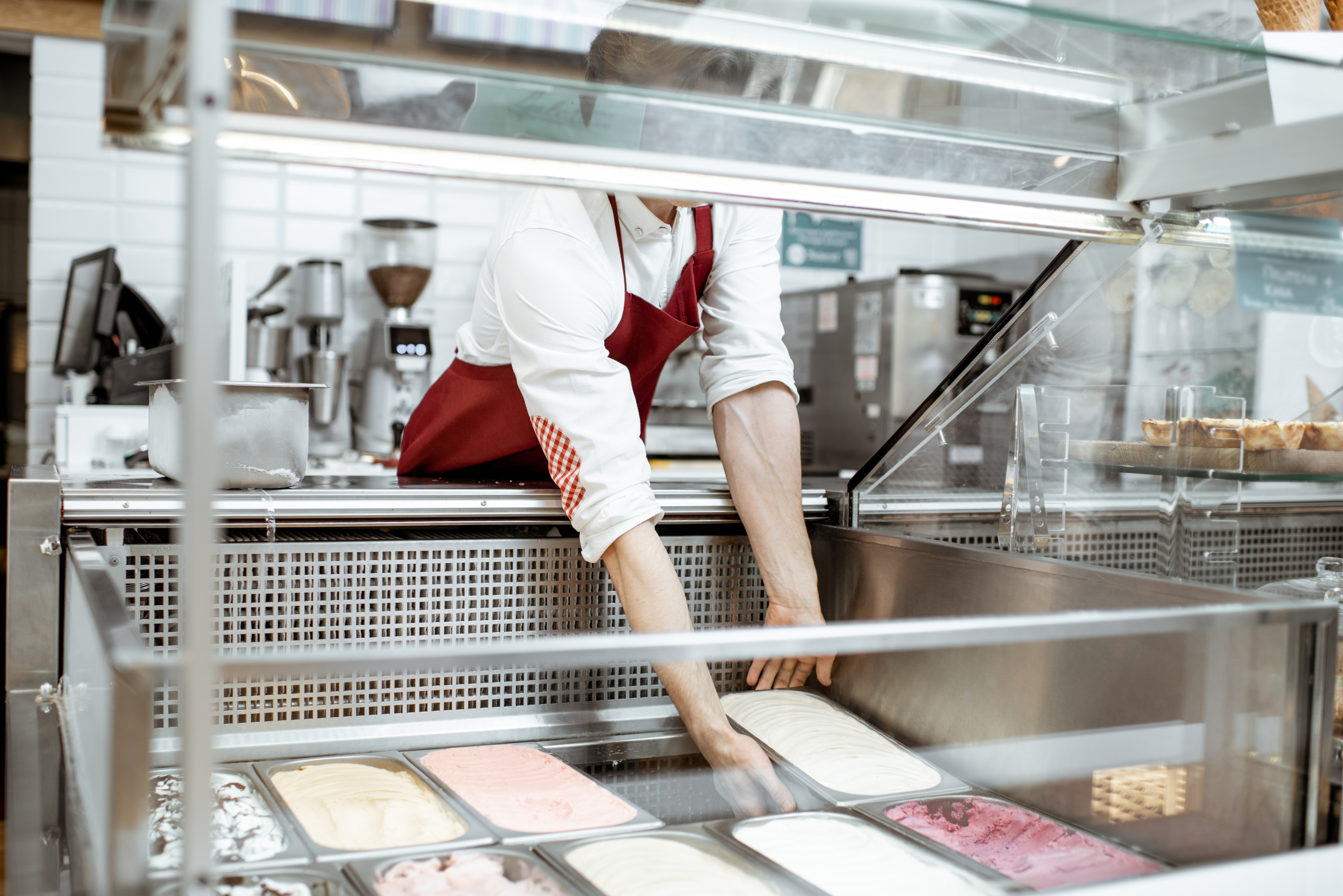
1:ndustrial freeze dryer — interior chamber showing product shelves, vacuum system, and condenser
The Freeze-drying Process: Three Phases Explained
The freeze-drying process is not a single step but a carefully controlled sequence of three distinct phases — each critical to the quality of the final freeze-dried food product.
Phase 1: Freezing
The first phase of the freeze-drying process is the most critical; the product must be frozen correctly before any drying can occur:
- The food is cooled to a freeze-drying temperature typically between -40°C and -80°C, well below the freezing point of water
- These extreme cold converts all of the water in the food into ice before the vacuum phase begins
- The rate of freezing matters enormously; rapid freezing produces small, uniform ice crystals that preserve the food’s cellular structure and result in a better-quality final product; slow freezing produces large ice crystals that can rupture cell walls and damage texture
- Some products are pre-frozen in separate blast freezers before being loaded into the freeze dryer
Phase 2: Primary Drying (Sublimation)
The primary drying phase is where the bulk of the moisture, approximately 95% of the total water content, is removed:
- The vacuum system lowers the chamber pressure to between 0.1 and 2.0 millibars, far below the triple point of water (6.1 millibars at 0.01°C)
- At this reduced pressure, the ice in the food sublimes directly into water vapour without passing through a liquid phase
- Gentle heat is applied to the product shelves, typically between –20°C and +20°C, to provide the energy needed for sublimation without melting the ice
- The water vapour travels to the condenser, where it is recaptured as ice on the cold condenser coils
- Primary drying is the longest phase, typically taking 12 to 48 hours depending on the product, its thickness, and the dryer’s capacity
Phase 3: Secondary Drying (Desorption)
After primary drying, approximately 5–10% of the original water remains in the product, bound to the food’s molecular structure and not removable by sublimation:
- The shelf temperature is raised to between +20°C and +60°C, still well below conventional drying temperatures
- This gentle heat drives off the remaining bound moisture through desorption, reducing the final moisture content to as low as 1–4%
- The precise final moisture level is critical, too high and the product will spoil; too low and it may become excessively brittle or absorb moisture rapidly upon packaging
Freeze-drying Examples: What Foods Are Freeze-dried?
Freeze-drying examples span a surprisingly wide range of food categories, from everyday consumer products to specialised military and space food applications:
Everyday Consumer Freeze-dried Foods
- Instant coffee and tea: One of the earliest and largest-scale freeze-drying applications in the food industry, freeze-dried coffee granules dissolve instantly while retaining aroma and flavour
- Fruits: Strawberries, raspberries, mangoes, bananas, and blueberries are among the most common freeze-dried food products, retaining vibrant colour, full flavour, and near-complete nutritional value
- Vegetables: Peas, corn, mushrooms, onions, and spinach are widely freeze-dried for use in instant soups, noodle packets, and ready meals
- Dairy products: Milk, yoghurt, and cheese powders produced by freeze-drying retain flavour and nutritional quality far better than spray-dried equivalents
- Herbs and spices: Freeze-dried herbs retain their fresh flavour and colour, significantly superior to air-dried alternatives
Specialist and Industrial Freeze-dried Food Examples
- Military rations and emergency food: Lightweight, long-shelf-life freeze-dried food is the ration of choice for military field operations and disaster relief stockpiles
- Space food: NASA and other space agencies rely on freeze-dried food for astronaut nutrition; the weight savings and long shelf life are critical in space missions
- Nutraceuticals and health supplements: Freeze-dried fruit and vegetable powders are used extensively in health supplements, protein powders, and functional foods
- Pet food: Premium freeze-dried pet food is a rapidly growing category, offering raw nutrition in a shelf-stable format
Advantages of Freeze-drying
The advantages of freeze-drying over conventional preservation methods are substantial, particularly for high-value food products where quality and nutrition are the priority:
- Superior nutritional retention: Freeze-dried food retains up to 97% of its original vitamins, minerals, enzymes, and antioxidants, compared to 40–60% retention in heat-dried products
- Exceptional shelf life: Properly packaged freeze-dried food has a shelf life of 15–25 years, making it ideal for emergency stockpiling, military logistics, and export
- Minimal quality degradation: Colour, flavour, aroma, and texture are preserved far better than with any other drying method, and rehydrated freeze-dried food closely resembles fresh food
- Lightweight and convenient: Removing 95–99% of the water content reduces product weight by up to 90%, dramatically reducing logistics costs for export and military applications
- Rapid rehydration: Freeze-dried food rehydrates quickly and completely, typically within 1–5 minutes, because the sublimation process leaves a porous, sponge-like structure that absorbs water readily
- Clean label compatibility: Freeze-drying requires no preservatives, additives, or chemical treatments, perfectly aligned with India’s growing consumer demand for clean-label food products
- Reduced microbial risk: The extremely low moisture content of freeze-dried food (1–4%) effectively prevents microbial growth without the need for refrigeration
Disadvantages of Freeze-drying
Despite its impressive capabilities, the disadvantages of freeze-drying mean it is not universally applicable across all food categories and production scales:
- High capital cost: What is a freeze dryer in terms of investment? Industrial-scale freeze dryers cost significantly more than conventional drying equipment, making the technology accessible primarily to larger food manufacturers
- Long processing time: The freeze-drying process takes 12–48 hours per batch, far longer than spray drying (seconds) or hot air drying (hours), limiting throughput and increasing energy costs
- High energy consumption: Maintaining deep vacuum and very low condenser temperatures throughout a long processing cycle consumes significantly more energy per kilogram of product than conventional drying
- Fragility of the dried product: The porous structure that makes freeze-dried food rehydrate so well also makes it physically fragile, requiring careful packaging to prevent crumbling and breakage during handling and transport
- Not suitable for all foods: High-fat foods, such as avocado, full-fat meat cuts, and oily fish, do not freeze-dry well, as the fat content inhibits sublimation and can turn rancid during the long drying cycle
- Oxygen sensitivity: The porous structure of freeze-dried food absorbs oxygen readily if not properly packaged in vacuum or nitrogen-flushed packaging, accelerating oxidative deterioration
Is Freeze-dried Food Healthy?
Is freeze-dried food healthy? This is one of the most frequently asked questions about freeze-drying in food processing, and the answer, based on the available nutritional science, is a clear yes, with some nuance.
Important Nuances
- Freeze-dried food produced with added sugar, salt, or flavourings is not inherently healthier than conventionally processed alternatives; the health value lies in the process, not the marketing
- Portion awareness matters; the lightweight and concentrated flavour of freeze-dried food can make it easy to overconsume, as the physical bulk cues that regulate intake are reduced
- Rehydration with water is important; eating freeze-dried food in its dry state without adequate fluid intake can contribute to dehydration
Freeze-drying in the Food Industry: Growing Applications in India
Freeze-drying in food industry applications is expanding rapidly in India, driven by several converging trends:
- Export growth: India’s food processing export sector, particularly fruits, vegetables, spices, and nutraceuticals, is increasingly adopting freeze-drying to meet the quality and shelf-life requirements of demanding export markets in Europe, North America, and the Middle East
- Ready-to-eat and instant food demand: India’s urban consumer market for instant soups, ready meals, and convenience foods is growing at over 15% annually, driving demand for high-quality freeze-dried food ingredients
- Nutraceutical sector expansion: The Indian nutraceutical industry, projected to reach USD 18 billion by 2025 (FICCI, 2023), relies heavily on freeze-drying for producing high-potency fruit, vegetable, and probiotic powders
- Dairy and beverage applications: Freeze-dried milk, buttermilk, and dairy powders are finding growing use in Indian food manufacturing as premium alternatives to spray-dried dairy ingredients
- Agricultural value addition: Freeze-drying offers Indian farmers and food processors a powerful tool for reducing post-harvest losses and adding significant value to perishable agricultural produce before export or domestic sale
FICSI: Advancing Food Science and Processing Knowledge in India
At FICSI, we are committed to building the knowledge, skills, and technical capability that India’s food processing industry needs to compete and grow on the global stage. As a leading food industry skilling and knowledge platform operating under the Ministry of Food Processing Industries, Government of India, FICSI recognises freeze-drying as one of the key advanced food processing technologies that Indian food science professionals and industry practitioners must understand and master.
Through our training programs, certification courses, and industry knowledge resources, FICSI equips food technologists, production managers, quality professionals, and entrepreneurs with the practical understanding of freeze-drying in food processing, food processing and preservation technologies, and the broader food science competencies needed to drive innovation, reduce post-harvest losses, and build world-class food manufacturing capabilities across India. Whether you are beginning your career in food science or leading a food manufacturing operation, FICSI is your partner in professional development and industry excellence.
Conclusion
Freeze-drying is not merely a preservation technique; it is a transformative food technology that bridges the gap between fresh food quality and long-term shelf stability in a way that no other process can match. From the science of freeze-drying temperature and sublimation through to the practical realities of freeze-drying in the food industry, understanding this technology is increasingly essential for anyone working in India’s rapidly growing food processing sector.
The advantages of freeze-drying, superior nutrition retention, exceptional shelf life, clean label compatibility, and rapid rehydration make it one of the most valuable tools available for food processing and preservation today. And as Indian food manufacturers scale up to meet both domestic and export demand, freeze-drying will only grow in importance as a key differentiator of quality and innovation.
Frequently Asked Questions (FAQs)
Q: What is freeze-drying in simple terms?
Freeze-drying, in simple terms, is a process that removes water from food by first freezing it solid and then creating a vacuum around it so the ice turns directly into vapour, skipping the liquid stage entirely. The result is a lightweight, shelf-stable product that retains the nutrition, colour, and flavour of the original food almost perfectly.
Q: What is the freeze-drying temperature used in food processing?
The freeze-drying temperature varies by phase. During initial freezing, food is typically cooled to between -40°C and -80°C. During primary drying (sublimation), shelf temperatures range from -20°C to +20°C under deep vacuum. During secondary drying, temperatures rise to +20°C to +60°C to remove remaining bound moisture. These low temperatures are what protect the food’s nutritional content and flavour throughout the process.
Q: Is freeze-dried food healthy compared to fresh food? Is freeze-dried food healthy?
Yes. Freeze-dried food retains up to 97% of the nutritional content of fresh food, including vitamins, minerals, enzymes, and antioxidants, making it significantly more nutritious than canned or heat-dried alternatives. It contains no preservatives when produced correctly and closely matches the flavour and texture of fresh food upon rehydration.
Q: What are the main disadvantages of freeze-drying?
The primary disadvantages of freeze-drying are high equipment and energy costs, long processing times (12–48 hours per batch), the physical fragility of the dried product, and unsuitability for high-fat foods. These factors make freeze-drying more expensive per kilogram than conventional drying methods, though the superior product quality justifies the premium for high-value food applications.
Q: What are some common freeze-drying examples in everyday life?
Common freeze-drying examples in everyday life include instant coffee, freeze-dried fruits (strawberries, mangoes, blueberries), instant soup vegetables, dairy powders, baby food, health supplement powders, and premium pet food. Many people consume freeze-dried food regularly without being aware of the technology behind it.
Q: How does freeze-drying differ from regular freezing?
Regular freezing simply converts the water in food to ice and maintains the product in a frozen state, requiring continuous refrigeration and still resulting in quality degradation over time. Freeze-drying goes further; it removes the ice entirely through sublimation under vacuum, producing a shelf-stable product that requires no refrigeration and has a shelf life of 15–25 years while retaining far better nutritional and sensory quality than frozen food stored over long periods.
Related Blogs
What Is Condensed Milk? Ingredients, Types, Uses & Benefits
Last Updated on September 28, 2026 by Admin Table of...
What Is Maltodextrin? Uses, Benefits, Side Effects & More
Last Updated on September 25, 2026 by Admin Table of...

What Is Food Chemistry? Meaning, Principles, Basics & Importance
Last Updated on September 25, 2026 by Admin Table of...
What Are Nutraceuticals Types, Applications, and Industry Growth in India
Last Updated on September 21, 2026 by Admin Table of...
Natural and Artificial Preservatives in Food: A Complete Guide
Last Updated on August 31, 2026 by Admin Table of...
Different Types of Sugar in Food and Their Effects on Health
Last Updated on August 6, 2026 by Admin Table of...

Food Colours Explained: Types, Uses, Natural vs Artificial & FSSAI Guidelines
Last Updated on July 7, 2026 by Admin Summary Food...